



Why Do Some Farmers Stop Weighing Livestock?
For livestock producers, weight data plays an important role in managing animal performance. Regular weighing helps farmers monitor growth rates, evaluate feed efficiency, identify underperforming animals, and make more informed marketing decisions.
Most farmers understand the value of weight information. However, on many farms, livestock were not weighed as planned.
The reason is usually not a lack of interest in data. In many cases, the weighing process itself becomes a challenge.
Common Reasons Why Farmers Stop Weighing Regularly
1. The System Takes Too Long to Set Up
During the busy season, farmers often don’t have much time to deal with additional tasks.
If a weighing system requires lengthy setup procedures, complex wiring, or frequent adjustments, weighing operations may be postponed to a more convenient time, which usually means a reduction in weighing frequency.
2. Cumbersome Daily Operation
Some weighing indicators contain numerous settings and menu layers.
While advanced functions can be useful in certain situations, many farmers prefer equipment that can be operated quickly without needing to navigate complex menus every time they weigh animals.
3. Unstable Weight Readings
Unstable readings can reduce confidence in collected data.
When operators need to repeat weighing procedures multiple times to obtain a stable result, the process becomes less efficient and more frustrating.
4. Equipment Incompatible with Farm Environment
Mud, dust, rain, and heavy daily use can be demanding on weighing equipment.
If the equipment is difficult to clean or not designed for harsh farm environments, maintenance requirements may increase and weighing frequency may decrease over time.
What Encourages Farmers to Weigh More Often?
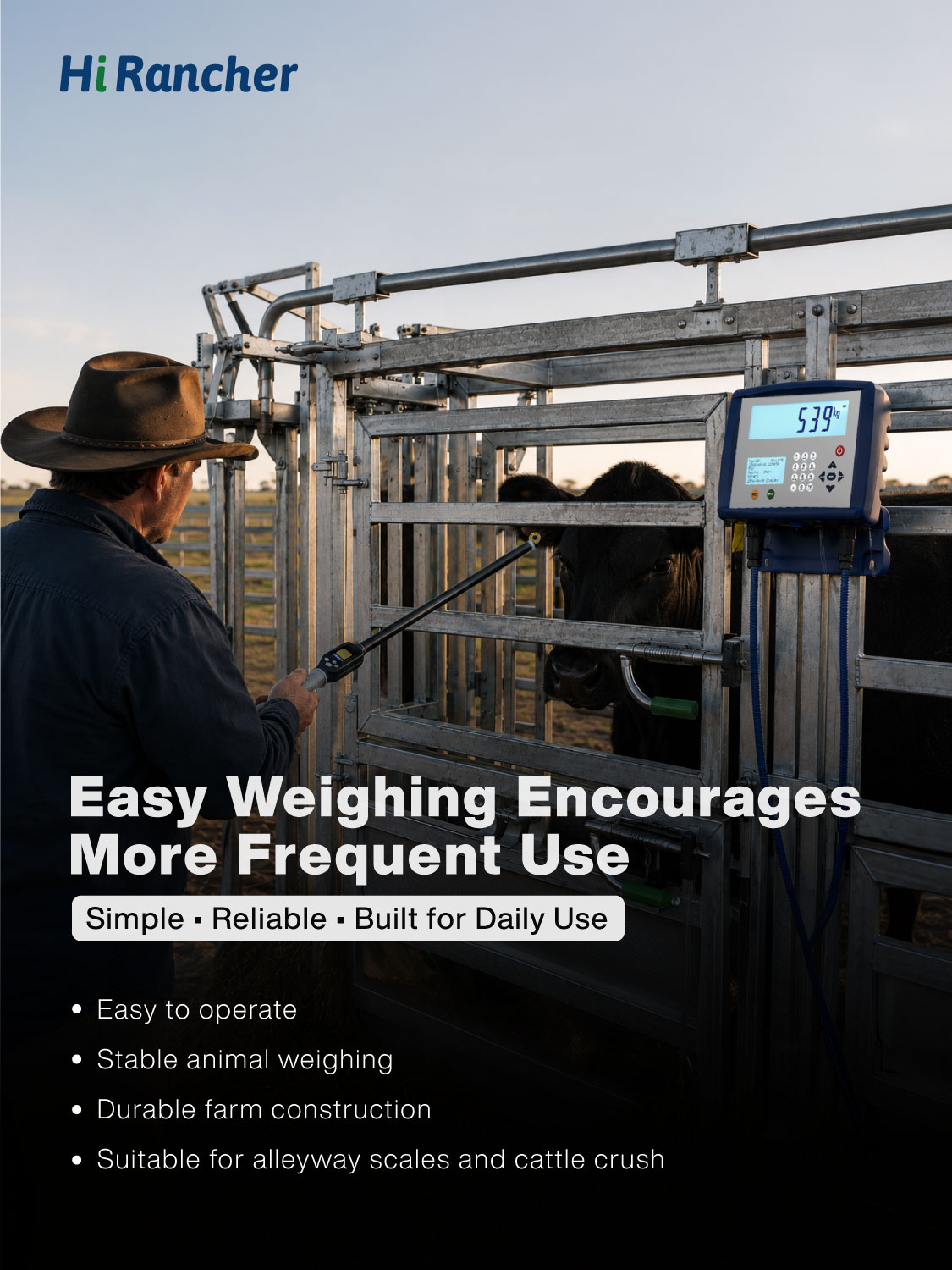
Many dealers have noticed a simple trend: when weighing becomes easier, farmers are more likely to use it regularly. The most frequently used weighing systems often share several characteristics:
- Simple and intuitive operation
- Stable and reliable weight readings
- Durable construction for daily farm use
- Quick setup and minimal maintenance
- Equipment that integrates easily into existing handling facilities
When weighing is naturally integrated into daily livestock management, collecting weight data becomes a routine task rather than an extra burden.
Recommended Livestock Weighing Solutions
For dealers and livestock producers looking for practical weighing solutions, a complete weighing system can help simplify the weighing process.
The design is simple to operate and has stable performance, making it suitable for daily livestock weighing applications.
Heavy-duty weigh bars provide reliable weight measurement and can be installed under livestock platforms, crates, or handling systems.
Combining a cattle crush, weigh bars, and indicator allows farmers to weigh animals during normal handling procedures, reducing additional labor requirements.
For farms using animal identification systems, EID tags can help connect weight records with individual animal data for improved management and traceability.
Conclusion
Many farmers have stopped weighing their livestock not because the weighing data lacks value. More commonly, the frequency of weighing decreases when the weighing process is time-consuming, laborious, or inconvenient.
Simple operation, reliable performance, and durable equipment can help make weighing a regular part of livestock management, allowing farmers to collect more consistent data and make better-informed decisions.