



Why More Farms Are Linking EID with Weight Data?
Many livestock farms are no longer using weighing simply to record today’s weight. Instead, they want to track individual animal performance, monitor Average Daily Gain (ADG), and maintain accurate weight histories for each animal.
To support these needs, more farmers are combining Electronic Identification (EID) systems with livestock weighing equipment.
Why Weight Data Alone Is No Longer Enough?
A single weighing can only reflect the animal’s health status at a specific moment. While useful, it does not answer important management questions such as:
- Which animals are gaining weight most efficiently?
- Which animals gain weight at a rate lower than the group average?
- How does growth performance compare between weighing sessions?
- Did the nutrition and feeding program achieve the expected results?
To answer these questions, farms need historical records that can be linked to individual animals. This is where EID technology becomes increasingly valuable.
The Growing Role of EID in Livestock Management
EID allows each animal to carry a unique electronic ID number that can be read automatically.
As traceability requirements continue to develop in many countries, EID is becoming increasingly common in cattle, sheep and other livestock farms. In addition to meeting regulatory requirements, many farmers are discovering additional benefits from EID systems, including:
- Faster animal identification
- Reduced recording errors
- Improved herd management
- Easier data collection
- Better performance analysis
When EID data is connected directly with weight records, the value of both systems increases significantly.
A Practical Solution for Livestock Data Management
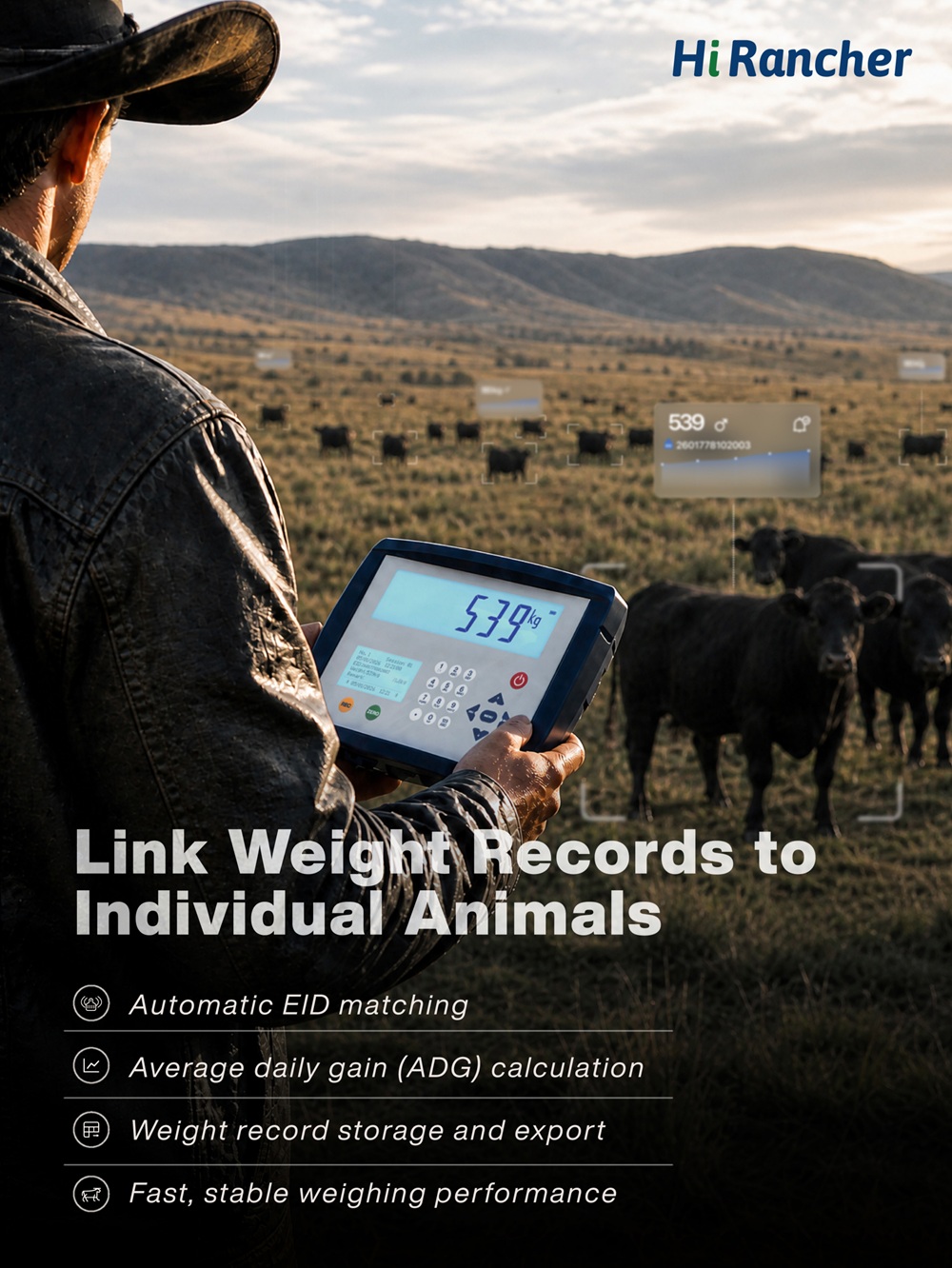
The FOX PRO animal management indicator is designed to automatically link EID information with weight records, helping farms collect and manage livestock data more efficiently.
Key features include:
- Automatic EID matching
- Average Daily Gain (ADG) calculation
- Weight record storage
- Data export
- Fast and stable weighing performance
Benefits of Linking EID with Weight Data
1. Individual Animal Performance Tracking
Instead of recording weights manually, farmers can automatically associate each weight with a specific animal. This allows for the creation of a complete weight history record for each animal in the herd. Over time, farmers can monitor growth trends and compare performance differences between different groups.
2. Average Daily Gain (ADG) Monitoring
Average Daily Gain (ADG) is one of the most important performance indicators in livestock production.
By comparing weight records collected on different dates, farmers can quickly calculate growth rates and identify animals that may require additional attention. Monitoring ADG can help improve:
- Feeding efficiency
- Production planning
- Market preparation decision
- Herd profitability
3. Reduced Manual Record
Traditional recording methods often require writing down ear tag numbers and weights separately before entering them into management software. This process can be time-consuming and increases the risk of human error. An integrated EID weighing system can automatically match identification data with weight records, reducing paperwork and improving data accuracy.
4. Better Long-Term Decision Making
Historical animal records provide valuable information for:
- Breeding selection
- Feeding program evaluation
- Health monitoring
- Marketing decisions
- Herd performance analysis
Instead of relying on observations alone, producers can make decisions based on measurable data.
Conclusion
As livestock operations continue to adopt EID technology, the focus is shifting from simply collecting weights to managing animal performance data. By linking EID records with weight information, farms can improve growth monitoring, reduce manual record keeping, and gain deeper insights into herd performance. For many farmers, weighing is no longer just about today’s weight, it is about building a complete picture of each animal’s development over time.