



Why Do Some Farms Stop at the Basic Weighing Setup?
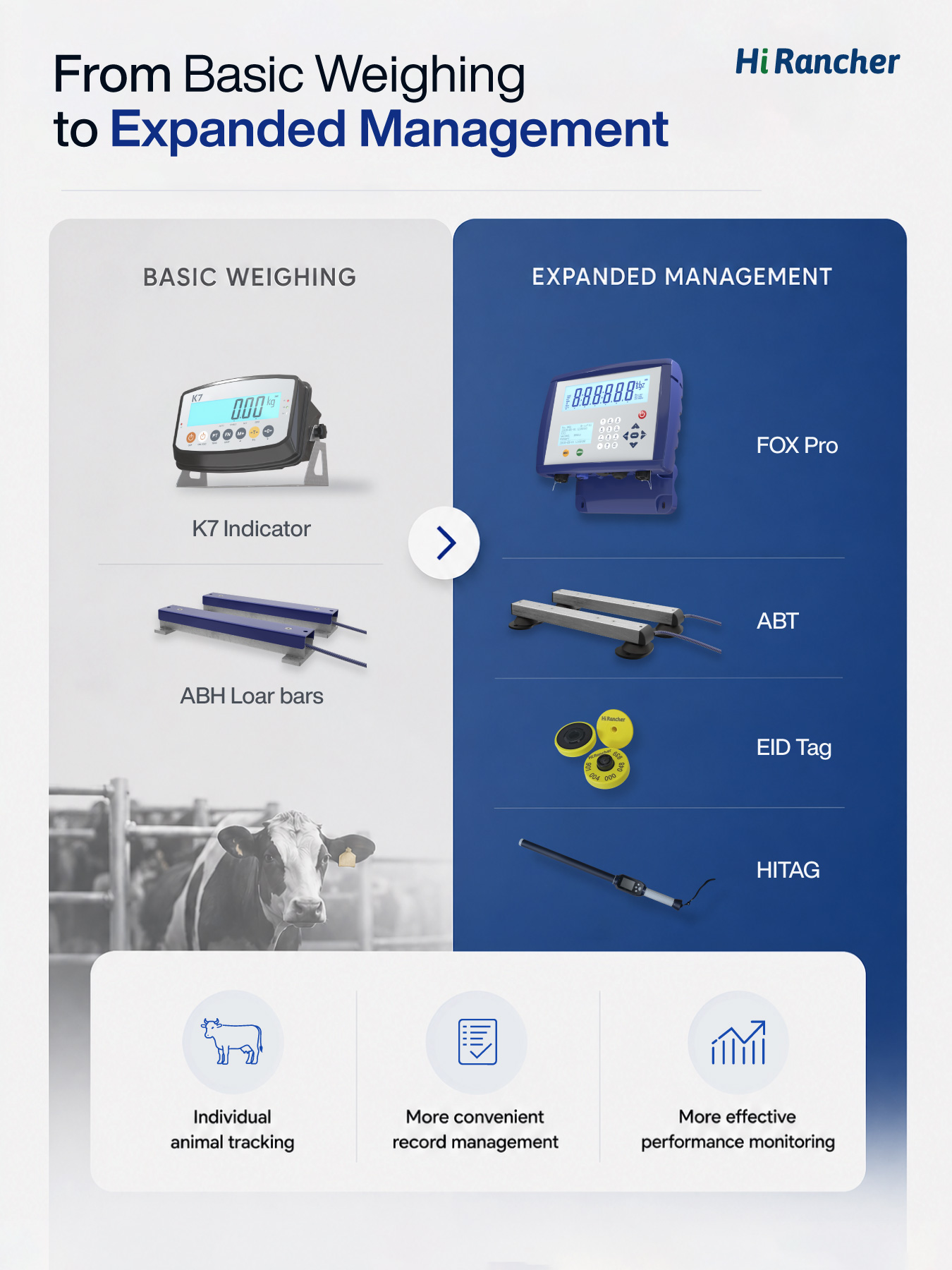
Many livestock farms start in a similar way: a set of weigh bars, an indicator, and a simple process for recording animal weights.
For some farms, this setup continues to meet their needs for many years. Others are gradually increasing electronic identification, collecting more detailed records, or introducing weighing in more locations.
Why do some farms expand their weighing systems while others continue with a basic setup?
Different Farms Have Different Priorities
Not every farm uses weighing information in the same way.
For some producers, a few accurate weighings a year are sufficient. Other producers rely more frequently on weighing records to monitor growth, compare different groups, or track long-term changes in individual animals.
As management priorities change, equipment requirements often change as well.
Expansion Is Usually Driven by Practical Needs
Most farms will not expand their weighing systems simply because new technology is available.
Expansion often happens when producers want to:
- Identify individual animals more easily
- Reduce manual record keeping
- Compare performance over time
- Collect information at multiple weighing locations
In many cases, these requirements develop gradually rather than appearing all at once.
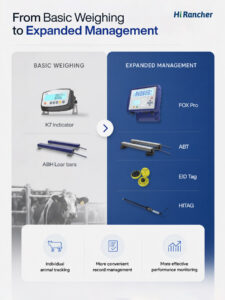
Not every farm needs the same level of equipment.
For some farms, a simple weighing system can meet their needs for many years. For other farms, additional tools have become particularly important as management methods have evolved.
The important point is that livestock weighing systems are not always static. Requirements can change over time as farms grow, management priorities shift, and new information becomes valuable.
Supporting Different Stages of Livestock Weighing
Whether a farm requires a basic weighing setup or a system that can expand over time, flexibility is often an important consideration.
From weigh bars and indicators to EID-compatible weighing solutions, dealers are increasingly looking for systems that can support a range of livestock management requirements.