




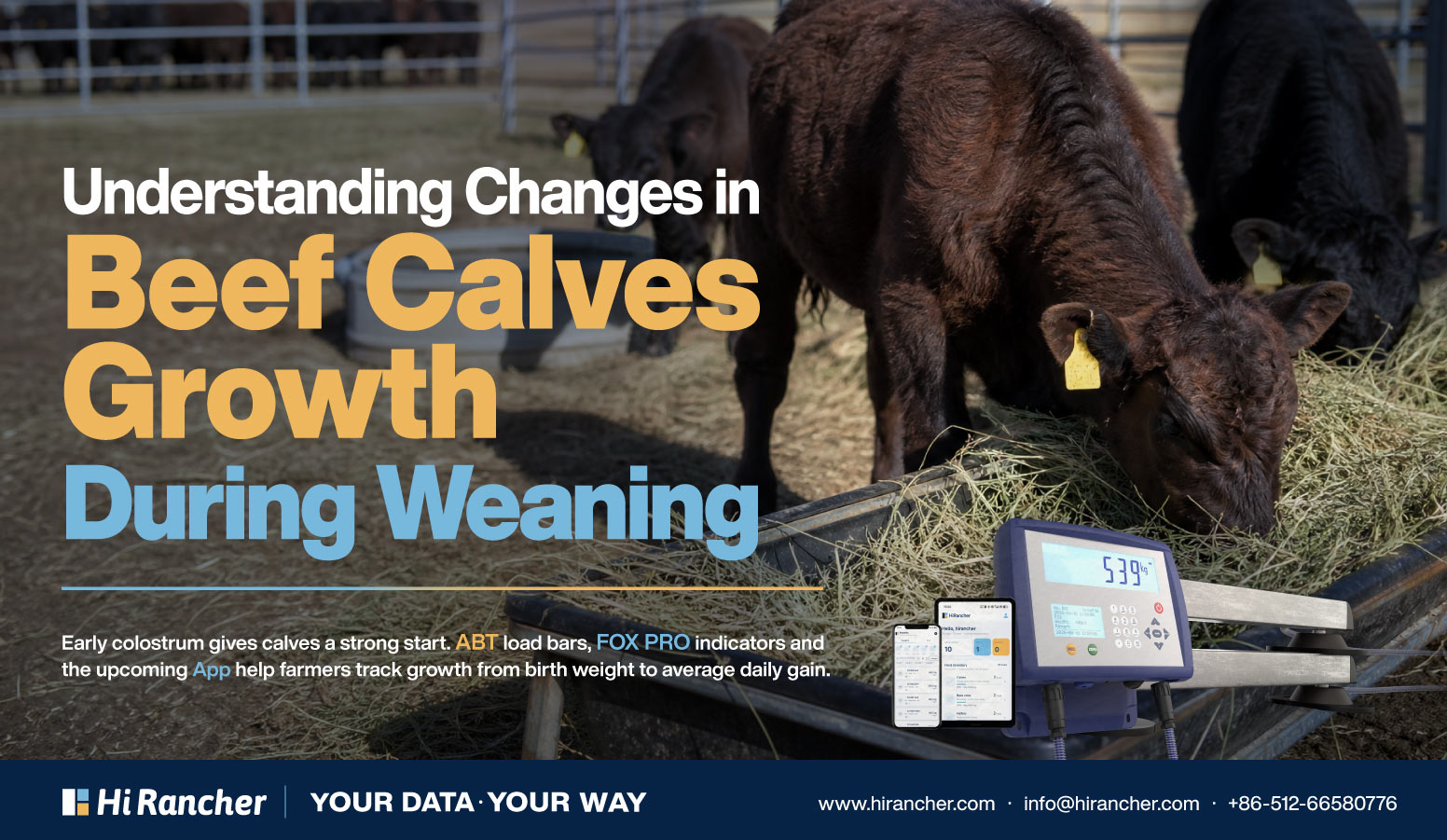
Understanding Changes in Beef Calves Growth During Weaning
Weaning is an important stage in beef calf development. It marks the transition from a milk-based diet to solid feed, involving changes in digestion, feeding behavior and growth. Proper weaning management helps beef calves adapt to these changes and maintain healthy development.
When Are Beef Calves Usually Weaned?
In beef cattle production, calves are usually weaned at around 6–8 months of age. However, some farms choose earlier weaning depending on pasture availability, cow condition and production goals.
Weaning decisions should not be based on age alone. Body weight, overall development and the availability of suitable feed after weaning are also important considerations.
There is no universal target weaning weight, as it varies with breed, sex, birth weight, maternal milk production and feeding conditions.
Rumen Development and Changes in Diet
When a calf is born, its rumen is not yet fully developed. Milk mainly passes directly to the abomasum through the esophageal groove for digestion.
As calves begin to eat pasture, forage and other solid feeds, the rumen gradually develops. Microorganisms establish themselves in the rumen and ferment feed, producing volatile fatty acids (VFAs) that provide an important source of energy.
These fermentation products also promote the growth of rumen papillae, small projections on the rumen wall that increase its ability to absorb nutrients. Meanwhile, forage consumption supports rumen muscle development and chewing activity.
By the time of weaning, the rumen is much more functional, allowing calves to obtain more nutrients from solid feed rather than milk.
How Does Weaning Affect Calf Growth?
Weaning involves changes beyond diet. Separation from the cow, unfamiliar environment and new feeding methods can cause stress.
Some calves may temporarily reduce feed intake, resulting in slower weight gain. Providing familiar feed, sufficient forage and clean water can help reduce these effects and support the transition.
Monitoring Weight Changes Around Weaning
Recording calf weight before and after weaning helps farmers evaluate individual calf growth and adaptation.
- Record birth weight and weaning weight.
- Calculate ADG to assess growth performance.
- Compare weight changes before and after weaning.
- Identify calves with slower growth that may need closer attention.
These records provide a useful basis for evaluating calf development and adjusting feeding management.
Conclusion
Weaning is a major transition in beef calf development, involving changes in nutrition, rumen function and behavior. Choosing an appropriate weaning time and providing suitable feed and management can help calves adapt and maintain growth. Regular weighing and individual identification provide valuable information for monitoring their development throughout this stage.