



Bovine Stress Response: SAM System and HPA Axis
Common Triggers and Signs of Bovine Stress Response
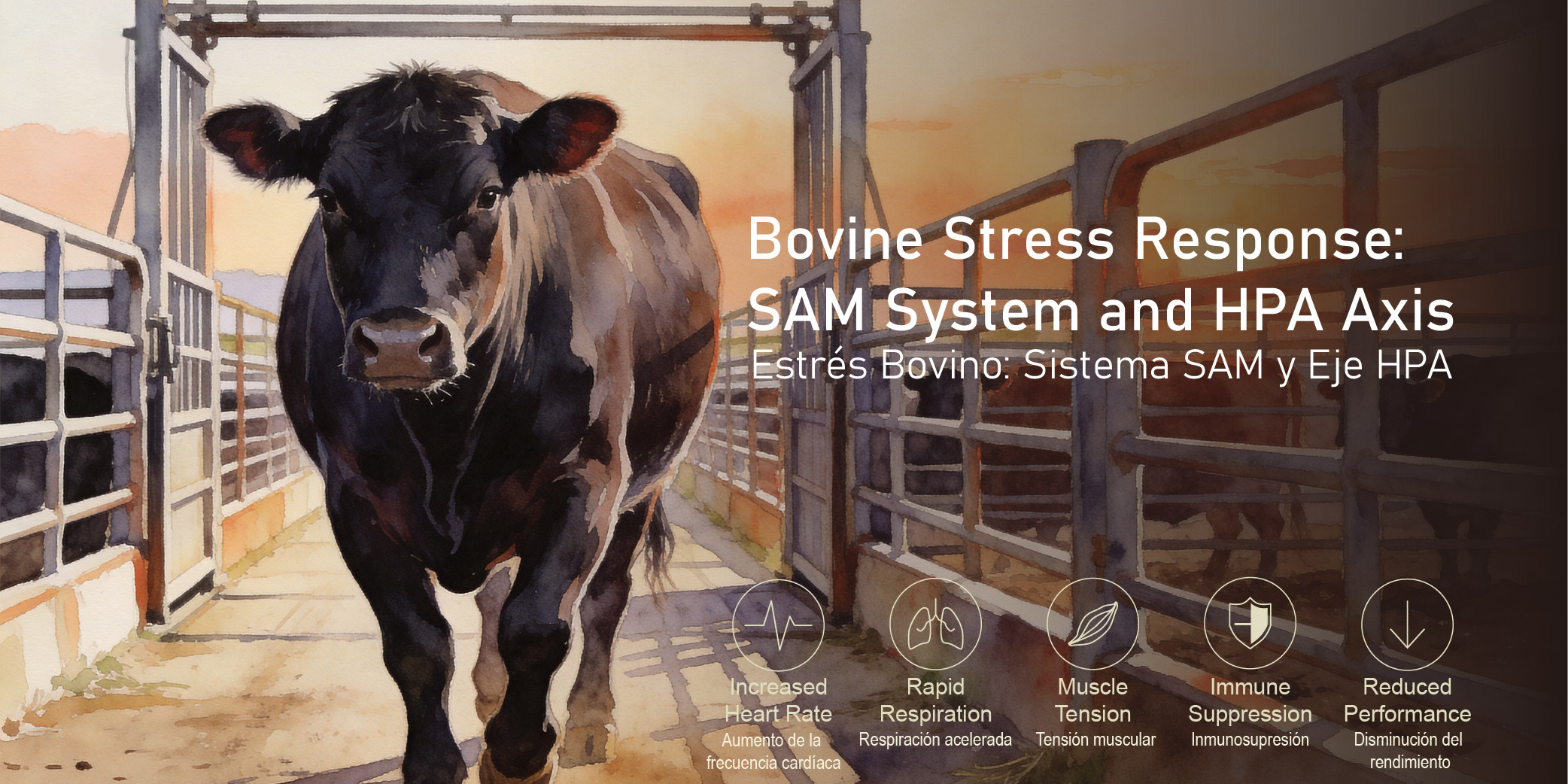
Handling, transportation, weighing, regrouping, and environmental changes can all trigger stress responses in cattle. Common signs include agitation, reduced feed intake, increased respiration, and sometimes altered lying behavior or reduced rumination. Prolonged stress may also affect immunity, rumen stability, and reproductive performance.
Two Major Regulatory Systems
The SAM system controls rapid, short-term responses by releasing epinephrine and norepinephrine. These hormones prepare the body for immediate action—raising heart rate, increasing breathing, and mobilizing energy—helping cattle react quickly to sudden challenges such as loud noises or rough handling.
The HPA axis regulates longer-term stress adaptation through cortisol secretion. When a stressor persists, cortisol helps maintain energy balance and suppress non-essential functions. However, if cortisol remains elevated for too long, it can suppress immunity and reduce digestive efficiency.
Mild Stress vs. Chronic Stress
Mild stress from routine weighing or calm handling is generally recoverable, and animals typically return to baseline without lasting effects. However, rough handling, long transport, frequent regrouping, and poor environmental conditions may contribute to chronic stress and reduced performance.
Practical Suggestions for Reducing Bovine Stress Response
Reducing unnecessary high-intensity stress through low-stress management techniques, adequate rest during transport, and stable social groups helps maintain herd stability, animal welfare, and long-term productivity.