



How to Choose Load Bars for a Cattle Crush?
Cattle crushers are often the starting point for building livestock weighing systems. If you already have a crush and want to add weighing, choosing the right load bars is an important part of the installation.
The load bars need to fit the crush, support the expected weight and work reliably in the farm environment. The right choice depends on the equipment you have and how you plan to use it.
What Are Load Bars Used for in Cattle Weighing?
Load bars are installed below a suitable weighing platform, cattle restraint frame, or other livestock weighing structure. They measure the load and send the weight signal to a weighing indicator.
For cattle weighing, the load bars need to support more than the weight of the animal. The crush itself is also part of the load. This is why the weighing capacity should be considered together with the weight of the crush and the cattle being weighed.
The right installation method is also important. The load bars need to be properly supported and installed so that the weighing structure can move as intended.
What Capacity Do You Need?
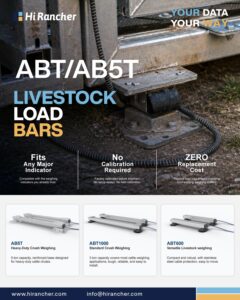
The load bar capacity should cover the weight of the cattle crush and the heaviest cattle you expect to weigh. For most standard cattle weighing applications, a 3-ton capacity is suitable. Larger cattle and heavy-duty hydraulic crushes may require a higher capacity.
ABT1000: For Standard Cattle Crushes
The ABT1000 is designed for standard cattle crushes, mechanical squeeze chutes and routine cattle weighing.
- Capacity: 3,000 kg
- Length: 1000 mm
- Structure: Hot-dip galvanized sealed housing
A practical choice for everyday cattle weighing where a 3-ton capacity is sufficient.
AB5T: For Heavy-Duty Cattle Crushes
The AB5T is designed for large beef cattle weighing over 500 kg, hydraulic cattle chutes and commercial fattening farms.
- Capacity: 5,000 kg
- Length: 1100 mm
- Structure: Hot-dip galvanized sealed housing and reinforced base
Its higher capacity makes it suitable for heavy-duty cattle weighing applications.
Can You Add Load Bars to an Existing Cattle Crush?
In many cases, existing cattle crushes can be used as part of a weighing system, but the installation must be checked.
The crush must be suitable for weighing, and the load bars need to be installed correctly beneath the structure. The support points, available space and total load all need to be considered. The weighing indicator also needs to be compatible with the load bars.
If you are planning to add weighing to an existing cattle crush, it is useful to provide the crush dimensions, the approximate weight of the structure and the maximum cattle weight. These details help determine whether the load bars are suitable for the application.
What Else Should You Check Before Buying?
Crush dimensions
Check the length, width and support points of the crush so that the load bars can fit the installation.
Total weighing capacity
Consider the crush weight together with the heaviest cattle you expect to weigh.
Farm environment
Wet, muddy and outdoor conditions may affect which load bar structure is most suitable.
Indicator compatibility
The load bars need to work with the weighing indicator used in the system.
Installation
The support structure and installation method should be suitable for the weighing equipment.
Find the Right Load Bars for Your Cattle Weighing System
Whether you are building a new cattle weighing system or adding weighing to an existing crush, the load bars need to match the equipment and the working conditions. HiRancher offers ABH and ABT load bars in different lengths and capacities for livestock weighing applications.
If you are not sure which model is suitable, contact us with your crush dimensions, required capacity and installation details. We can help you identify a suitable load bar option for your cattle weighing system.