



Why Data Accuracy Matters in Livestock Weighing and Identification Systems
Introduction
Accurate data is the foundation of effective livestock management.
However, in many operations, data collected from weighing and identification processes is often incomplete, inconsistent, or inaccurate.
Inaccurate data leads to poor management decisions and financial loss.
As farms scale up and regulatory requirements become stricter, ensuring livestock weighing accuracy and reliable animal data tracking is no longer optional. It is essential for both operational efficiency and compliance.
The Real Cost of Inaccurate Livestock Data
Data errors in livestock operations are not always immediately visible, but their impact accumulates over time.
Common consequences include:
- Incorrect assessment of animal growth performance
- Inefficient feed allocation and higher feeding costs
- Delayed identification of health issues
- Inaccurate herd records
- Increased risk during audits or export inspections
In large herds, even small data inconsistencies can result in significant financial losses.
Where Do Data Errors Come From?
1. Manual Recording Processes
Many farms still rely on manual workflows:
- Writing down animal IDs
- Recording weight separately
- Entering data later into spreadsheets
This creates multiple points of failure:
- Human error during recording
- Data mismatch between ID and weight
- Missing or duplicated records
2. Unstable Weighing Conditions
Livestock weighing is typically performed in dynamic environments:
- Animals moving during weighing
- Uneven or muddy ground
- Outdoor conditions affecting equipment
Without proper signal processing, this leads to:
- Fluctuating readings
- Inconsistent weight data
- Reduced livestock weighing accuracy
3. Disconnected Identification and Weighing
In systems where identification and weighing are handled separately:
- ID is recorded manually
- Weight is captured independently
This often results in:
- Incorrect ID–weight pairing
- Loss of traceability
- Unreliable historical data
Why ID + Weight Must Be Captured Together
For accurate animal data tracking, identification and weighing must occur in a single process.
An EID livestock system enables this by:
- Automatically identifying animals via electronic ear tags
- Capturing weight data simultaneously
- Linking both into one record
This eliminates the need for manual matching and significantly reduces errors.
How Modern Systems Improve Data Accuracy
A well-designed livestock weighing and identification system integrates:
- Indicateur de pesage
- Load bars or weigh beams
- Lecteur EID
- Data storage and export
Automated Workflow
- Animal enters weighing area
- Load bars measure weight
- EID reader identifies the animal
- Indicator links ID and weight automatically
- Data is stored for later use
This process ensures:
- Consistent and repeatable data collection
- Reduced reliance on manual input
- Improved overall data integrity
The Role of the Weighing Indicator in Data Accuracy
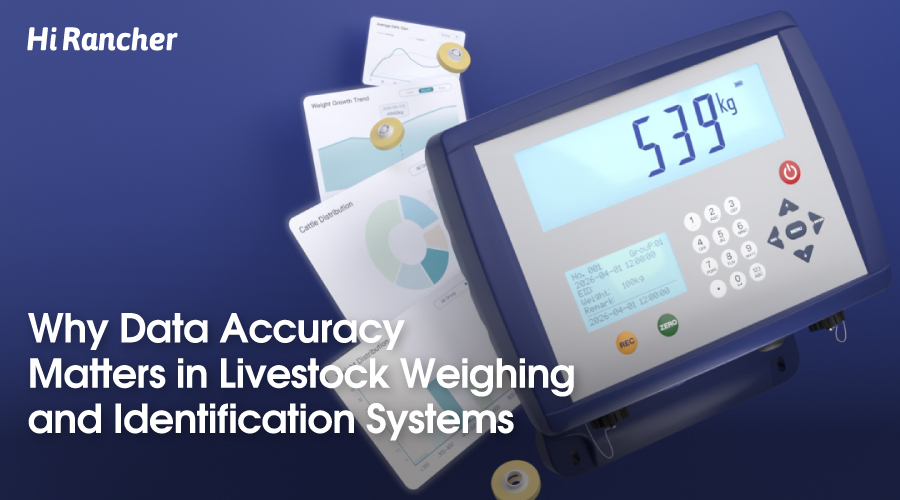
The weighing indicator is not just a display unit. It is the core device responsible for:
- Processing weight signals
- Linking ID and weight data
- Storing and managing records
A suitable livestock weighing indicator should provide:
- Stable readings under animal movement
- Clear and accessible data display
- Reliable data storage
Practical Data Handling: What to Expect
In real farm environments, data handling needs to be simple and reliable.
For example, systems like FOX PRO support:
- Data storage for animal records
- Export via RS232 or Bluetooth
- Transfer of data to external devices or existing equipment
This allows farms to:
- Maintain structured records
- Use data in external analysis tools
- Integrate with existing workflows where required
It is important to note that integration is typically done through data export and transfer, rather than direct software system integration.
Accuracy and Compliance Go Hand in Hand
Accurate livestock data is essential for:
- Traceability requirements
- Export certification
- Veterinary inspections
- Regulatory compliance
Incomplete or inconsistent data can lead to:
- Delays in certification
- Rejection in export processes
- Increased audit risk
A reliable EID livestock system helps ensure that all records are:
- Consistent
- Verifiable
- Easily accessible
Moving from Manual to Reliable Data Systems
Farms that transition from manual processes to integrated systems typically achieve:
- Higher data accuracy
- Reduced labor requirements
- Better decision-making capability
- Improved operational efficiency
The key is not just collecting more data, but collecting accurate and usable data.
Conclusion
In livestock operations, data quality directly affects performance, cost, and compliance.
Without accurate data:
- Growth analysis becomes unreliable
- Feeding strategies are less effective
- Traceability is compromised
By combining weighing and identification into a single system, farms can significantly improve livestock weighing accuracy and ensure reliable animal data tracking.
Improve Your Data Accuracy with the Right System
If you are experiencing issues with inconsistent data or manual recording, it may be time to upgrade your system.
You can share:
- Animal type and farm size
- Current weighing setup
- Data management requirements
- Whether EID identification is used
Request:
- A suitable EID livestock system configuration
- Compatibility check with your existing equipment
- Technical details and pricing

contact