



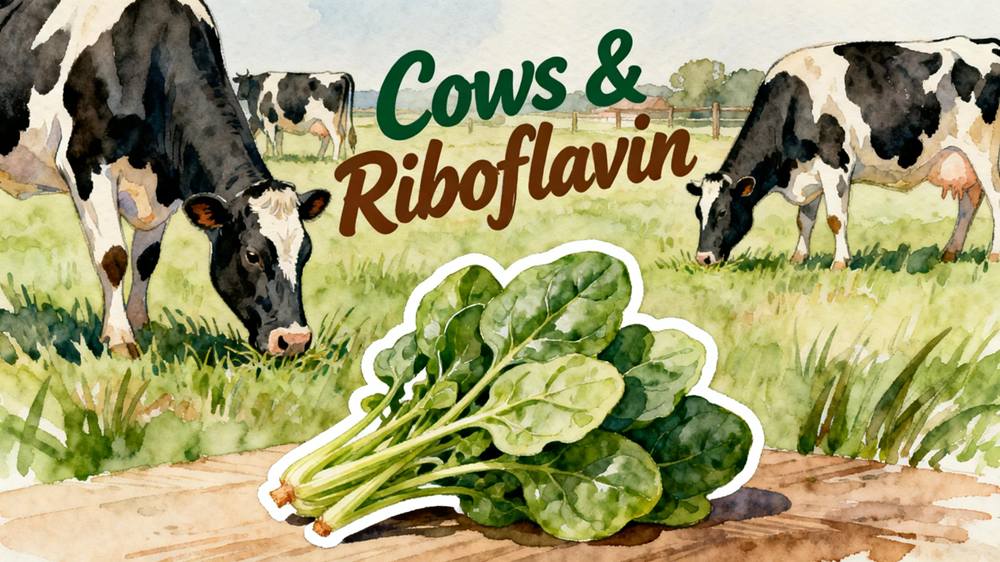
Why Can’t Dairy Cows Live Without Riboflavin?
Part I: The Discovery of Riboflavin
Riboflavin, commonly known as vitamin B2, is an essential micronutrient that dairy cows cannot synthesize on their own yet critically depend on for health, growth, and milk production. Although its importance in dairy nutrition is now well recognized, the scientific understanding of riboflavin developed gradually over more than half a century.
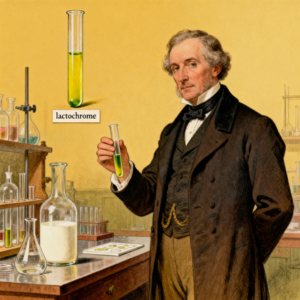
In 1879, British chemist Alexander Wynter Blyth first isolated a yellow-green fluorescent pigment from milk whey, naming it lactochrome. At the time, its chemical structure and biological function remained unknown.
Between the 1920s and 1930s, advances in nutritional science—particularly the hypothesis that nutrient deficiencies cause disease—led researchers to investigate unexplained health disorders in animals. Rodents fed purified diets developed symptoms such as angular stomatitis, seborrheic dermatitis, and growth retardation. Similar symptoms were simultaneously observed in dairy cows, including dry coats, cracked mouth corners, and reduced milk yield.
Researchers soon discovered that supplementing diets with fresh milk, yeast, or egg yolk rapidly reversed these symptoms. These foods were later found to be rich in the same fluorescent compound originally described as lactochrome.
Chemical Identification and Industrial Production
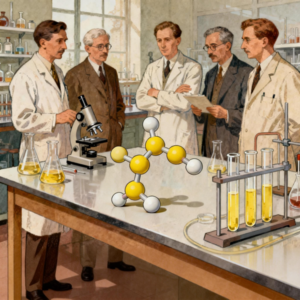
In 1933, Swiss chemist Paul Karrer successfully isolated 18 mg of the pure compound from 1,000 kg of milk. Around the same time, German scientist Richard Kuhn crystallized the same substance from egg yolks. By 1935, Kuhn’s team elucidated its molecular structure and officially named it riboflavin, reflecting its ribitol side chain and yellow coloration.
Soon after, riboflavin was synthesized artificially, and later produced at scale through microbial fermentation using strains such as Ashbya gossypii. These breakthroughs made riboflavin widely available for feed supplementation.
Why Riboflavin Became Critical in Modern Dairy Farming
As dairy farming transitioned from extensive grazing systems to intensive, high-yield production, nutritional demands increased substantially. Riboflavin in traditional feeds proved unstable, as it is highly sensitive to light and oxidation, leading to significant losses during storage and processing.
To address this, riboflavin began to be included as a functional feed additive, often protected by microencapsulation technologies. Today, riboflavin supplementation is precisely adjusted according to lactation stage, milk yield, and metabolic stress, making it a cornerstone of modern dairy nutrition programs.
Riboflavin’s Biological Role in Dairy Cows
Riboflavin itself is not biologically active. Within the cow’s body, it is converted into two essential coenzymes:
- Flavin mononucleotide (FMN)
- Flavin adenine dinucleotide (FAD)
These derivatives play indispensable roles in energy metabolism, enzyme activation, and—most importantly—protein metabolism, which directly influences milk protein synthesis and overall production efficiency.
In Part II, we will explore how FMN and FAD precisely regulate ruminal microbial protein synthesis and the methionine cycle, and why this regulation is critical for high-producing dairy cows.
References
Historical Discovery and Early Research Literature (1879-1935)
1. Blyth, A. W. (1879). On the yellow pigment of milk whey (lactochrome). Journal of the Chemical Society, Transactions, 35, 532-535. https://doi.org/10.1039/CT8793500530
2. Chick, H., & Roscoe, M. H. (1928). The dual nature of water-soluble vitamin B. II. The effect upon young rats of vitamin B2 deficiency and a method for the biological assay of vitamin B2. Biochemical Journal, 22, 790-799. https://doi.org/10.1042/bj0220790
3. Kuhn, R., & Wendt, H. (1933). Über Lactoflavin, ein Vitamin B2-haltiges Pigment aus Milch. Berichte der Deutschen Chemischen Gesellschaft, 66, 1262-1267. https://doi.org/10.1002/cber.19330660823
4. Karrer, P., et al. (1933). Über die Isolierung von Lactoflavin in reiner Form aus Milch. Helvetica Chimica Acta, 16, 1059-1064. https://doi.org/10.1002/hlca.19330160327
5. Kuhn, R., et al. (1933). Über Ovoflavin, ein Vitamin B2-haltiges Pigment aus Eiern. Berichte der Deutschen Chemischen Gesellschaft, 66, 1301-1308. https://doi.org/10.1002/cber.19330660828
6. Kuhn, R., et al. (1935). Über die Struktur des Lactoflavins (Riboflavin). Berichte der Deutschen Chemischen Gesellschaft, 68, 2067-2074. https://doi.org/10.1002/cber.19350681226
7. Kuhn, R., et al. (1935). Über die Synthese des Riboflavins (Vitamin B2). Angewandte Chemie, 48, 177-182. https://doi.org/10.1002/ange.19350480402
8. McCormick, D. B., & Greene, T. J. (2012). The discovery and characterization of riboflavin. Annals of Nutrition & Metabolism, 61, 224-230. https://doi.org/10.1159/000343111