



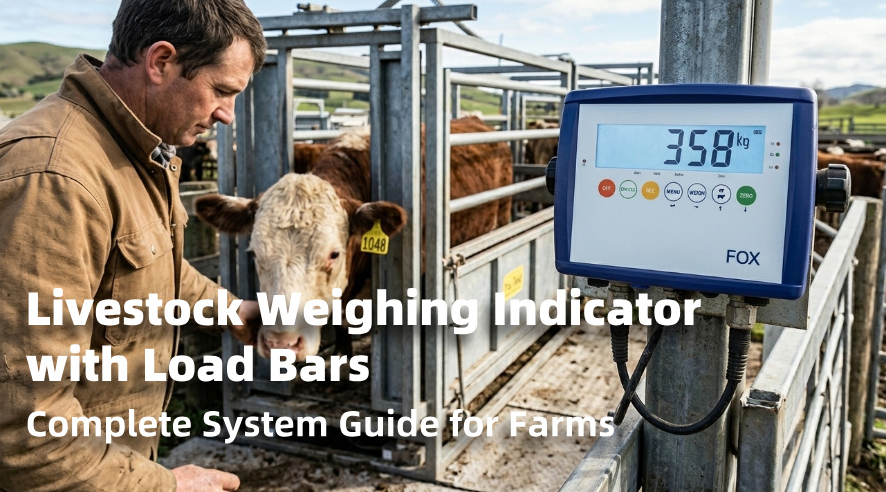
Livestock Weighing Indicator & Load Bars: Complete System Guide for Farms
A livestock weighing indicator only truly works when used as part of a complete weighing system. For most farms, this means combining the indicator with barres de charge (or weigh beams) and a suitable weighing structure such as a cattle crush or alleyway scale.
This guide explains how livestock weighing indicators and load bars work, how to properly configure the system, and what factors to consider when selecting equipment for actual farm conditions.
1. What is a Livestock Weighing System?
A standard livestock weighing system typically includes:
- Indicateur de pesage – displays and processes weight data
- Load bars / weigh beams – measure weight through load cells
- Platform / alleyway / cattle crush – where animals stand or pass through
- (Optional) Lecteur EID – identifies individual animals
👉 The weighing indicator acts as the central controller, while load bars handle the actual weight measurement.
2. How the System Actually Works
The workflow is very simple:
- The animal steps onto the weighing platform or passes through the alleyway
- Load bars detect the weight and convert it into electrical signals
- The weighing indicator processes and displays the weight
- (Optional) EID reader links the weight to a specific animal ID
This setup allows farms to weigh animals quickly without disrupting their normal activities.
3. Choosing the Right Load Bars for Your Indicator
Not all load bars work equally well in farm environments.
Key factors to consider:
- Capacité
Must match your livestock type (cattle, sheep or pigs)
- Length and hole position
Should fit your platform or cattle crush
- Material
Made of hot-dip galvanized carbon steel, suitable for high-intensity outdoor environments.
Made of carbon steel, suitable for general outdoor use.
- Protection level
Waterproof and dustproof for muddy conditions
👉 The load bars must be fully compatible with your livestock weighing indicator to ensure stable readings.
4. Choosing the Right Weighing Indicator
When used with a weighing bar, the weighing indicator must have the following characteristics:
- Signal stability
Accurate readings even when animals move
- durabilité extérieure
Waterproof design (IP65 / IP67 recommended)
- Compatibility
Suitable for different types of load bars and different capacities
- Data functions
Weight recording
Data export (USB / wireless)
- EID integration (optional)
Automatic animal identification
5. Common System Configurations
① Cattle Crush Weighing System
- Load bars installed under crush
- Indicator mounted nearby
- Suitable for weighing, examining, and treating single cattle.
👉 High accuracy, widely used in beef and dairy farms
② Alleyway Weighing System
- Animals walk through a weighing alley
- Continuous weighing without stopping
👉 Ideal for large herds and fast operations
③ Portable Weighing System
- Lightweight load bars + portable indicator
- Used in multiple locations
👉 Flexible solution for small to medium farms
6. Benefits of Using Indicator & Load Bars System
Compared with standalone scales:
- More flexible installation
Can be used with existing farm structures - Lower cost than full platform scales
- Easy maintenance and replacement
- Suitable for harsh environments
- Scalable system
Can add EID or software later
7. Adding EID to Your Weighing System
For farms requiring traceability, integrating an EID system offers the following advantages:
- Automatically identify each animal
- Link weight to animal ID
- Improved record accuracy
- Reduced manual input
👉 Especially useful for:
- Feedlots
- Breeding programs
- Export and traceability systems
8. Common Mistakes When Building a System
- Choosing incompatible load bars and indicators
- Ignoring outdoor conditions (water, mud)
- Using insufficient capacity for cattle
- Overlooking future expansion (EID integration)
👉 These issues often lead to inaccurate readings or system failure.
9. How to Select the Right System for Your Farm
Before purchasing, please prepare the following information:
- Animal type (cattle / sheep / pigs)
- Average weight range
- Weighing method (crush / alleyway / portable)
- Whether EID is required
- Existing equipment (if any)
👉 This allows suppliers to recommend a compatible and complete solution, not just individual components.
Conclusion
A livestock weighing indicator works best when combined with the right load bars and system setup. Choosing the correct configuration improves:
- Weighing accuracy
- Farm efficiency
- Data management
- Long-term reliability
Instead of buying components separately, it is more effective to plan the system as a whole.
Get a Complete Weighing System Recommendation
If you are planning to build or upgrade your livestock weighing system, we can help you select the right combination of:
- Indicateur de pesage
- Load bars / weigh beams
- Weighing structure (crush / alleyway)
- Optional EID integration
👉 Request a complete system solution
👉 Check compatibility with your current setup
👉 Get a quotation based on your farm requirements