



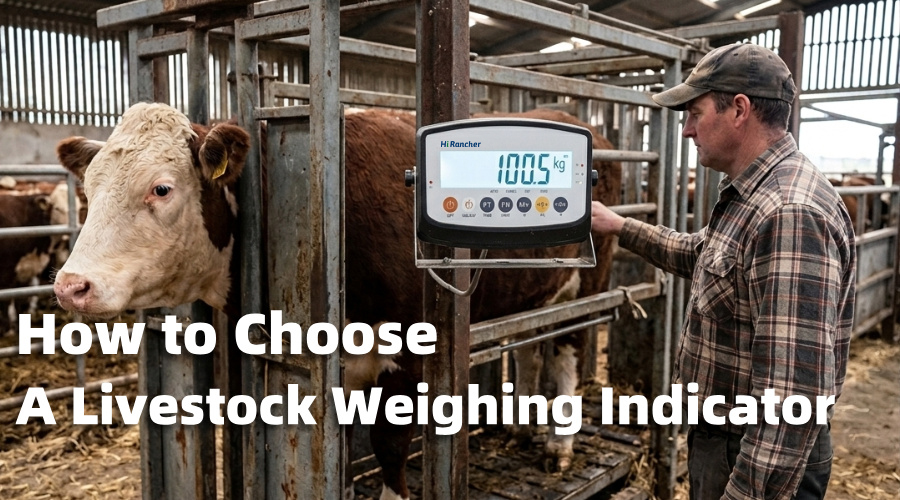
How to Choose a Livestock Weighing Indicator for Your Farm
Choosing the right indicador de pesaje de ganado is not just about reading weight, it determines how efficiently you manage animals, collect data, and integrate your weighing system with daily farm operations.
For farms, feedlots, and equipment distributors, selecting the wrong indicator often leads to unstable readings, compatibility issues, or limited functionality in real working conditions.
This guide explains how to choose a livestock weighing indicator based on actual farm use, helping you avoid common mistakes and select a solution that fits your system.
1. Define Your Application First (Cattle, Sheep, or Pigs)
Before comparing models, clarify how the indicator will be used:
- Cattle farms / feedlots
Require stable readings for heavy animals and compatibility with cattle crush or alleyway scales - Granjas de ovejas y cabras
Need fast response and accuracy for lighter animals - Pig farms
Often focus on frequent weighing and integration with batch management
▶ Different types of livestock have different requirements for stability and sensitivity in weighing.
2. Check Compatibility with Load Bars or Weigh Beams
A livestock weighing indicator is not a standalone device, it must work with:
- Load bars / Weigh beams
- Platform or alleyway scales
Key questions to ask:
- Is the indicator compatible with your existing load cells?
- Does it support multiple load bar configurations?
- Can it handle dynamic weighing (animal weighing)?
▶ Compatibility issues are one of the most common causes of inaccurate weighing.
3. Consider Whether You Need EID Integration
Modern farms increasingly use electronic identification (EID).
A livestock weighing indicator with EID allows you to:
- Automatically link animal ID and weight data
- Reduce manual recording errors
- Improve traceability and herd management
You should consider using EID if you meet the following criteria:
- You manage large herds
- You need individual animal records
- You are involved in traceability or export programs
▶ For smaller farms, a basic indicator may be sufficient. For growing operations, EID is a long-term upgrade.
4. Evaluate Durability for Real Farm Conditions
Farm environments are harsh. Your indicator must handle:
- Mud, dust, and water
- Outdoor exposure (rain, sunlight)
- Animal impact and vibration
Key factors:
- Waterproof rating (IP65 / IP67 recommended)
- Shock-resistant housing
- Stable performance in outdoor conditions
▶ Many failures are caused by using indicators designed for indoor or industrial environments, rather than those designed for farms.
5. Data Management and Connectivity
Modern livestock weighing displays should not only show weight, but also support data processing.
Consider the following:
- Data storage capacity
- USB or wireless data export
- Integration with farm management software
This is especially important if you:
- Track animal performance
- Monitor growth rates
- Manage breeding or feeding programs
6. Convenience of daily operation
Farm staff need fast and reliable equipment.
Please consider the following:
- Clear display readable in sunlight
- Simple interface and operation
- Fast response time during animal movement
▶ Complicated systems often reduce efficiency rather than improve it.
7. Choosing Between Basic and Advanced Indicators
Basic Indicator
- Weight display only
- Suitable for small farms
- Lower cost
Advanced Indicator (with EID & data functions)
- Animal ID + weight integration
- Data storage and export
- Suitable for medium to large farms
▶ The right choice depends on your operation scale and management goals.
8. Common Mistakes to Avoid
- Choosing based on price only
- Ignoring compatibility with load bars
- Underestimating outdoor conditions
- Selecting unnecessary features or omitting crucial functions
Conclusión
Livestock weighing indicators are a core component of your weighing system. Choosing the right weighing indicator can improve efficiency, data accuracy, and the long-term management benefits of a farm. In addition to focusing on specifications, the following aspects should also be evaluated:
- Application
- Compatibility
- Environment
- Data requirements
Need Help Choosing the Right Weighing Indicator?
If you are unsure which livestock weighing indicator fits your setup, you can share basic details with us:
- Animal type (cattle, sheep, pigs)
- Weighing method (crush, alleyway, portable)
- Existing equipment (load bars, scale type)
- Is EID required?
▶ Get a tailored recommendation based on your farm setup
▶ Request compatible weighing indicator solutions